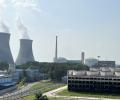
Atomic Energy Commission Chairman Ajit Kumar Mohanty announced that India's private sector is projected to invest Rs 7.5 lakh crore and contribute 30 GW towards the nation's goal of achieving 100 GW nuclear power capacity by 2047. This marks a significant policy shift, facilitated by the SHANTI Act, encouraging private participation in nuclear energy beyond the traditional public sector model. The country is also exploring Small Modular Reactors (SMRs) for industrial needs and advancing its three-stage nuclear power programme, leveraging its substantial thorium reserves.

The government introduced the SHANTI Act, 2025, to support the mission and open the sector to private participation.
Russia has offered India cooperation in localising large and small nuclear power plants as part of a civil nuclear energy collaboration between the two countries. The offer was made during a meeting at the IAEA General Conference in Vienna.
Ushering in reforms, Union Finance Minister Nirmala Sitharaman on Saturday proposed to open up the nuclear power sector for private players and announced a Rs 20,000 crore Nuclear Energy Mission for research in the field, with an aim to set up five small and modular reactors by 2033.

The rules require nuclear plant operators to maintain an insurance policy, financial security or a combination of both to cover civil liability for nuclear damage.

A country that makes the isotope sets the timetable for everyone who needs it.

Indian companies, including NBFCs, filed proposals to raise $7.696 billion through external commercial borrowings (ECBs) and foreign currency convertible bonds (FCCBs) in July 2026, a significant increase from $6.09 billion in June.

Adani Group Chairman Gautam Adani announced a capital expenditure programme of over 2 trillion for Adani Power, aiming for 45 gigawatts (Gw) capacity in five years, including a significant entry into nuclear power with a target of 10 Gw by 2035 through Adani Atomic Energy.

NPCIL Chairman and Managing Director SK Jain said the company had cash reserves of over $2.75 billion to fund the equity portion of the projects, which will have a debt-to-equity ratio of 70:30. India is working on raising its nuclear power generation capacity to 60,000 Mw by 2032 against the current 4,120 Mw. Another 3,160 Mw capacity is under construction.

One of the important topics of discussion between the two leaders is expected to be the Northern Sea Route and the Chennai-Vladivostok Maritime Corridor.

India on Tuesday said cooperation in peaceful uses of nuclear technology is an important pillar of the multifaceted cooperation with Russia, which offered help in building small tropical nuclear power stations.
India's power sector is undergoing a significant transformation, driven by a planned shift towards renewable energy and ambitious capacity expansion targets, with major players like NTPC, JSW Energy, Adani, and Tata Power prioritising predictable returns. However, execution challenges and valuation concerns remain critical factors for sustained growth.
The Nuclear Power Corporation of India Ltd has postponed the expected date of commissioning of the first unit of Kudankulam Nuclear Power Plant to next month
India's target of nuclear power generation of 20,000 megawatt by 2020 has been quietly lowered by the Nuclear Power Corporation of India Limited (NPCIL), the only government agency setting up the nuclear power plants in the country, to 11,080 MW.

Indian Oil Corp (IOC), nation's largest oil firm, is likely to sign a joint venture agreement with Nuclear Power Corporation of India (NPCIL) this month to foray into nuclear power generation.
Contrary to perception, the cost of nuclear power based on imported fuel and equipment will be "comparable" to that from the conventional power plants, says Shreyans Kumar Jain, chairman and managing director of the Nuclear Power Corporation of India.
SK Jain, who heads NPCIL and Bhavini, tells Vandana Gombar Ayyagary and Sumana Guha Ray about how NPCIL is best placed to take India's nuclear power ambitions forward.
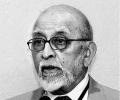
M R Srinivasan focused on the peaceful use of nuclear power at a time when the popular view among the 'hawks' was that India should build a nuclear arsenal as a deterrent.

Construction major L&T is gearing up to expand its footprint in the global nuclear supply chain, a senior company official has said, while calling for amendments to key legislations on the domestic front to pave the way for the entry of private players and foreign capital necessary for capacity enhancement.
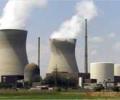
The huge reduction in the government's support for Bhavini has brought down the overall budgetary allocation for nuclear power schemes by 20 per cent.
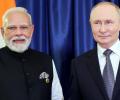
The Russian cabinet has cleared the signing of a memorandum of understanding (MoU) to deepen bilateral cooperation with India in civil nuclear energy during President Vladimir Putin's visit to the country.

India and Russia are expected to unveil a major nuclear energy partnership during Vladimir Putin's visit, potentially involving Russian small modular reactors and expanded cooperation as India pushes toward its 100-GW nuclear goal by 2047.
Government sources said amendments were being considered to the Atomic Energy Act to allow private sector participation and the Civil Liability for Nuclear Damage Act to limit the liability on suppliers of equipment to build atomic energy plants.

'Listing leads to greater transparency and shareholder oversight.'
Extending its nuclear power plant supply relationship with India to the non-nuclear sector, Russia's integrated atomic power major Rosatom State Corporation is in talks for a 50:50 additive technology joint venture.

The Indian government has introduced a bill to overhaul the civil nuclear sector, allowing private participation and establishing a new liability regime. The SHANTI Bill, 2025, aims to repeal existing acts and address industry concerns.

Fuel loading at India's first prototype fast-breeder reactor in Kalpakkam is expected to start next week, marking a significant step in the country's nuclear program.

Modi has made nuclear power a key element of his clean energy strategy
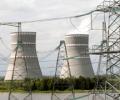
Under a 2010 nuclear liability law, nuclear equipment suppliers are liable for damages from an accident, which companies say is a sharp deviation from international norms

The two countries also asked all nations to stop cross-border movement of terrorists and asserted that a decisive collective response from the international community without 'double standards and selectivity' was required to combat the threat of terrorism.

The major advantages of such plants are no need of land to build the reactors, earthquake resistant, abundance of water for active or passive cooling.

The demerger of Vedanta's four new entities - Vedanta Aluminium Metal, Vedanta Oil & Gas, Vedanta Power, and Vedanta Iron & Steel - has led to a 16% appreciation in aggregated market capitalisation, with Vedanta Aluminium Metal identified as a likely near-term top performer due to its scale, low production costs, and favourable commodities cycle.

'Rajagopala Chidambaram's smile, simplicity and ability to put younger colleagues at ease always encouraged me to approach him for advice or guidance.'

'In all these years of rupee depreciation, of rising oil prices, of inflation caused by import dependence, not one leader had the courage to look the people in the eye and say: Please do this for your country.'
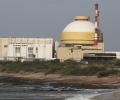
Owing to unfavourable weather conditions and for want of a barge the stator was not moved to Kudankulam earlier.

For the foreseeable future, the most likely outcome remains continuation of the status quo. Taiwan will remain self-governing without formally declaring independence, while China continues to apply sustained pressure short of war, predict Krishnan Srinivasan and Manoj Mohanka.
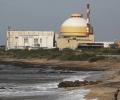
A milestone in Russian-Indian nuclear cooperation with the arrival of a reactor pressure vessel for the Kudankulam atomic power plant.
The country is planning to increase its nuclear power generation by about 60,000 mega watts (Mw) within the next 25 years. This planned capacity addition is being executed by the state-owned Nuclear Power Corporation of India Ltd (NPCIL). Its head, Chairman and Managing Director SK Jain, tells P B Jayakumar about his plans and expectations.
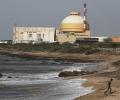
Kudankulam will house the largest nuclear power plants in India and the flagship project of Russian-Indian technological and energy cooperation.

Under the defence partnership, India and the UAE are eyeing defence industrial collaboration and cooperation in advanced technologies, cyberspace training, special operations, interoperability of their militaries and counter terrorism.
